Investing In Multi‑Unit Property On Big Pine Key
July 9, 2026
July 9, 2026
Looking at multi-unit property on Big Pine Key and wondering if the numbers really work? You are not alone. In a small island market where land is limited, access matters, and growth is tightly managed, the opportunity can be real, but so can the complexity. This guide will help you understand what makes Big Pine Key different, where investor demand comes from, and what to underwrite before you buy. Let’s dive in.
Big Pine Key is a small Lower Keys market with about 10.2 square miles of land area, which naturally limits supply. Monroe County also identifies the US-1 corridor as the sole vehicular corridor to the Lower Keys, so access is a major factor for both owners and tenants.
That limited supply is not just about geography. Monroe County ties the countywide housing challenge to high land values, environmental constraints, tourism-driven employment, and controlled growth under ROGO. For you as an investor, that means new supply is not easy to add, which can support long-term demand for existing rental property.
County planning documents also describe Big Pine Key as a long-standing bedroom community for workers connected to Key West and Marathon. That matters because it points to ongoing housing demand tied to real jobs and commuting patterns, not just seasonal market activity.
If you are picturing a large apartment project, Big Pine Key may not match that model. Local planning context supports a more small-scale investment approach, with housing historically included in duplex, multi-family, employee-housing, mobile home, and some commercial-district settings.
Along the Big Pine Key and US-1 corridor, Monroe County describes a mixed-use spine with commercial, office, and residential uses. The Center zone can support denser buildings with ground-floor commercial space, while the General zone is typically lower scale with one- to two-story development.
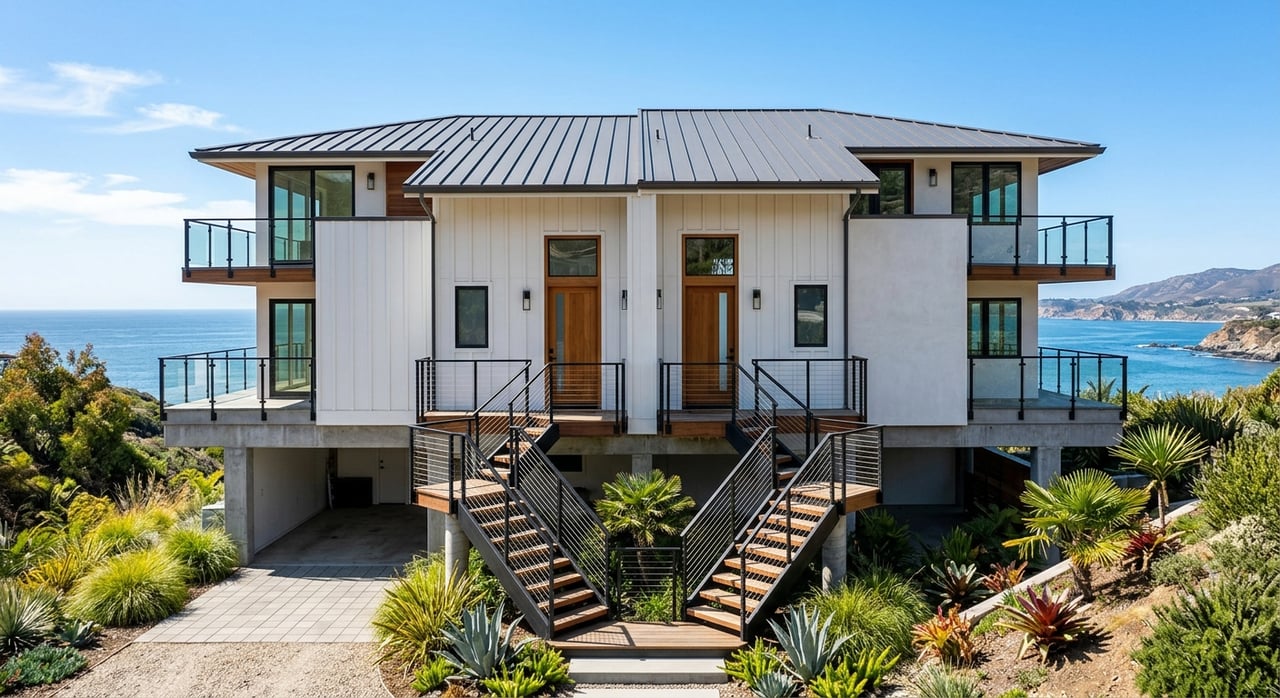
In practical terms, the better fit for many investors is a duplex, triplex, small apartment building, or another low-rise property with a modest footprint. This is a market where small-scale assets often make more sense than trying to force a mainland-style apartment strategy.
A major demand driver in Monroe County is the tourism economy. The county’s Tourist Development Council says tourism is the county’s largest economic engine, with about $3.5 billion in annual visitor spending, nearly $400 million in tax revenue, and more than 24,000 local jobs supported countywide.
Monroe County also directly links the housing shortage to tourism and lower-paying service-sector employment. For you, that helps explain why modest rental housing can attract steady interest in the Lower Keys, especially near job centers and major transportation routes.
Big Pine Key also has a distinct local setting. It serves as a gateway to the Lower Keys, offers community services and facilities, and sits near the National Key Deer Refuge. That quieter island environment may appeal to renters looking for a Lower Keys location outside the busiest areas, though it also comes with added environmental and operational considerations.
One of the biggest investment themes on Big Pine Key is constrained growth. Monroe County’s ROGO system manages development for hurricane safety and natural-resource protection, and the Florida Keys are treated as an Area of Critical State Concern.
Monroe County also notes that it must be able to evacuate its population within 24 hours of an approaching hurricane. That evacuation requirement shapes how growth is managed and why adding new units can be more difficult than many buyers expect.
ROGO scoring also weighs specific site conditions. Monroe County notes that central wastewater availability can help, while factors such as V-zone location, development in the Key Deer Corridor, No Name Key, and CBRS areas can affect scoring. If your investment plan depends on redevelopment, expansion, or new entitlements, these details matter early.
On Big Pine Key, endangered-species review is not just a remote policy issue. The U.S. Fish and Wildlife Service says about 75% of the Key deer population lives on Big Pine and No Name Keys, and development impacts are managed through a habitat-conservation framework.
For you, that means a property’s physical location can influence permit review, design assumptions, and timing. If you are planning to expand, rebuild, or materially alter a site, habitat-related review should be part of your underwriting from day one.
This does not mean every deal is a bad deal. It means a strong Big Pine Key investment strategy starts with realistic assumptions about process, approvals, and the time required to execute your plan.
In a market like Big Pine Key, headline rent is only part of the story. A better approach is to model the all-in ownership cost from the start.
Monroe County requires advanced wastewater treatment across the Keys, and local ownership costs can be heavier because of flood and hurricane exposure. A practical underwriting model should include:
If you skip these items and focus only on gross rent, the deal can look stronger on paper than it does in real life. On Big Pine Key, conservative underwriting is not optional. It is part of buying wisely.
Island investing often rewards patience. In a thin, policy-constrained market like Big Pine Key, resale windows may be narrower, and insurance or permitting can slow your timeline.
Weather can also distort short-term performance. Storm interruptions, evacuation events, or temporary access issues can affect occupancy, repairs, and year-to-year cash flow in ways that are less common in many mainland rental markets.
That is why it helps to view a Big Pine Key multi-unit purchase through a longer holding-period lens. If your plan depends on fast execution or a quick resale, the market may feel tighter than you expect.
Ownership on Big Pine Key can be hands-on, especially if you live off-island. Because access is limited and storm response can be time-sensitive, local support becomes a bigger part of the investment equation.
For absentee owners, a local manager or trusted service team can be important for repairs, post-storm response, tenant issues, and compliance follow-up. This is not a hard rule for every property, but it is a practical assumption in a market shaped by flood exposure, evacuation realities, and island logistics.
That is one reason many investors look for local guidance before they buy, not just after closing. The smoother your operating plan is upfront, the fewer surprises you are likely to face later.
For some investors, Big Pine Key can be part of a 1031 exchange strategy. IRS rules generally allow a like-kind exchange for real property held for investment or productive use in a trade or business, not for property held primarily for sale or personal-use property.
In a deferred exchange, replacement property generally must be identified within 45 days and received within 180 days, or by the tax return deadline if earlier. Investors commonly use a qualified intermediary to avoid constructive receipt of sale proceeds.
If you are considering a duplex, triplex, or small apartment building on Big Pine Key as replacement property, the key questions usually involve your use history, investment intent, and transaction structure. Mixed personal and rental use or related-party issues can complicate the analysis, so careful planning matters.
A good Big Pine Key investment often comes down to disciplined due diligence. Before you move forward, make sure you verify the property’s legal use and physical constraints instead of relying on assumptions.
Use this checklist as a starting point:
Each of these items can affect value, timing, and cash flow. On Big Pine Key, early diligence is often what separates a workable deal from an expensive lesson.
Big Pine Key can make sense if you want a small multi-unit asset in a market with limited supply, strong local housing pressure, and long-term relevance within the Lower Keys. It may be especially appealing if you are comfortable with a more hands-on, detail-oriented investment approach.
At the same time, this is not a plug-and-play rental market. Growth controls, environmental review, insurance costs, wastewater requirements, and storm planning all need to be part of your decision-making.
If you approach the market with realistic numbers, a clear regulatory path, and a solid local support plan, Big Pine Key can be worth serious consideration. If you would like help evaluating a duplex, triplex, or other income property in the Lower Keys, schedule a private consultation with Bobby Coe.
Stay up to date on the latest real estate trends.